
About the Project
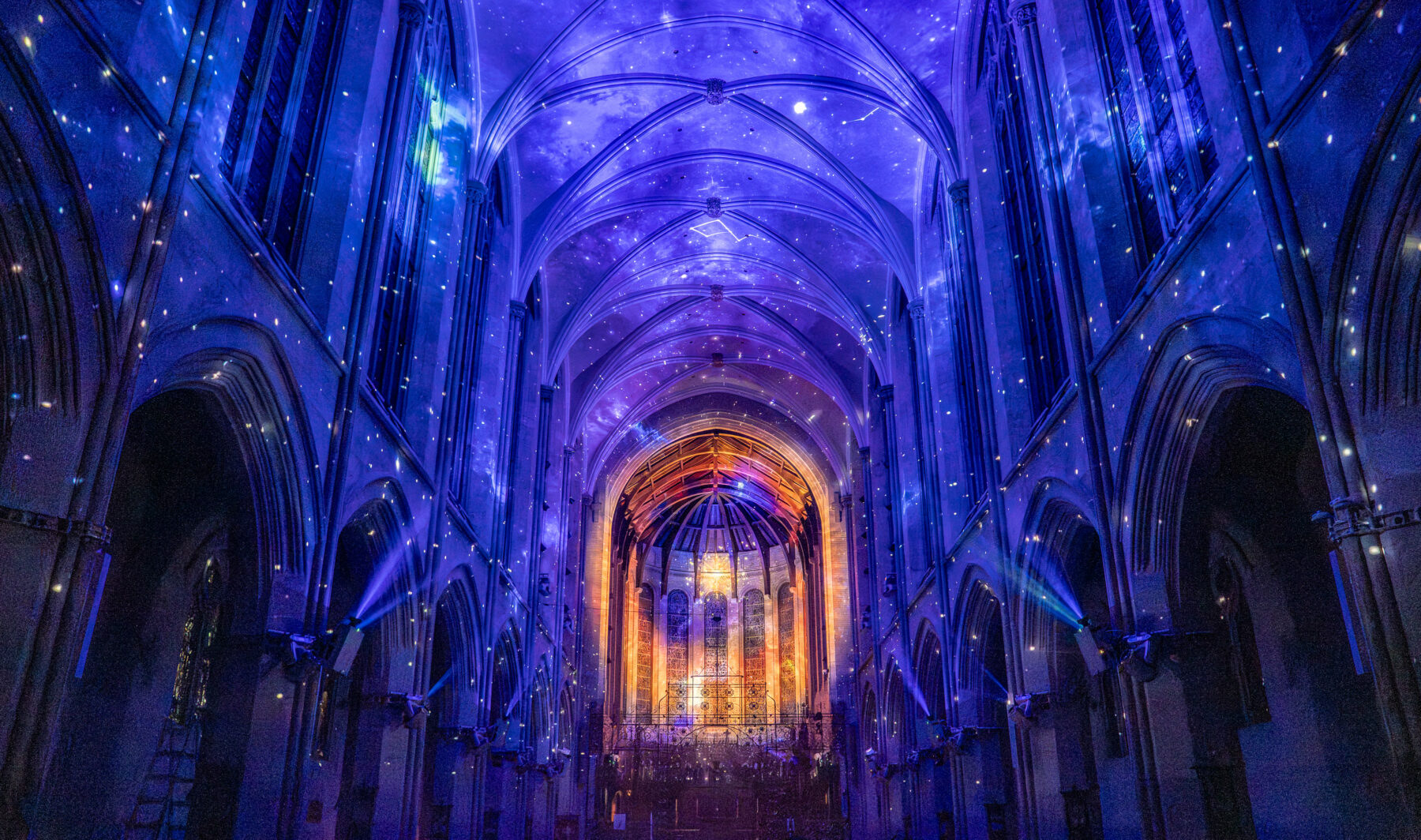
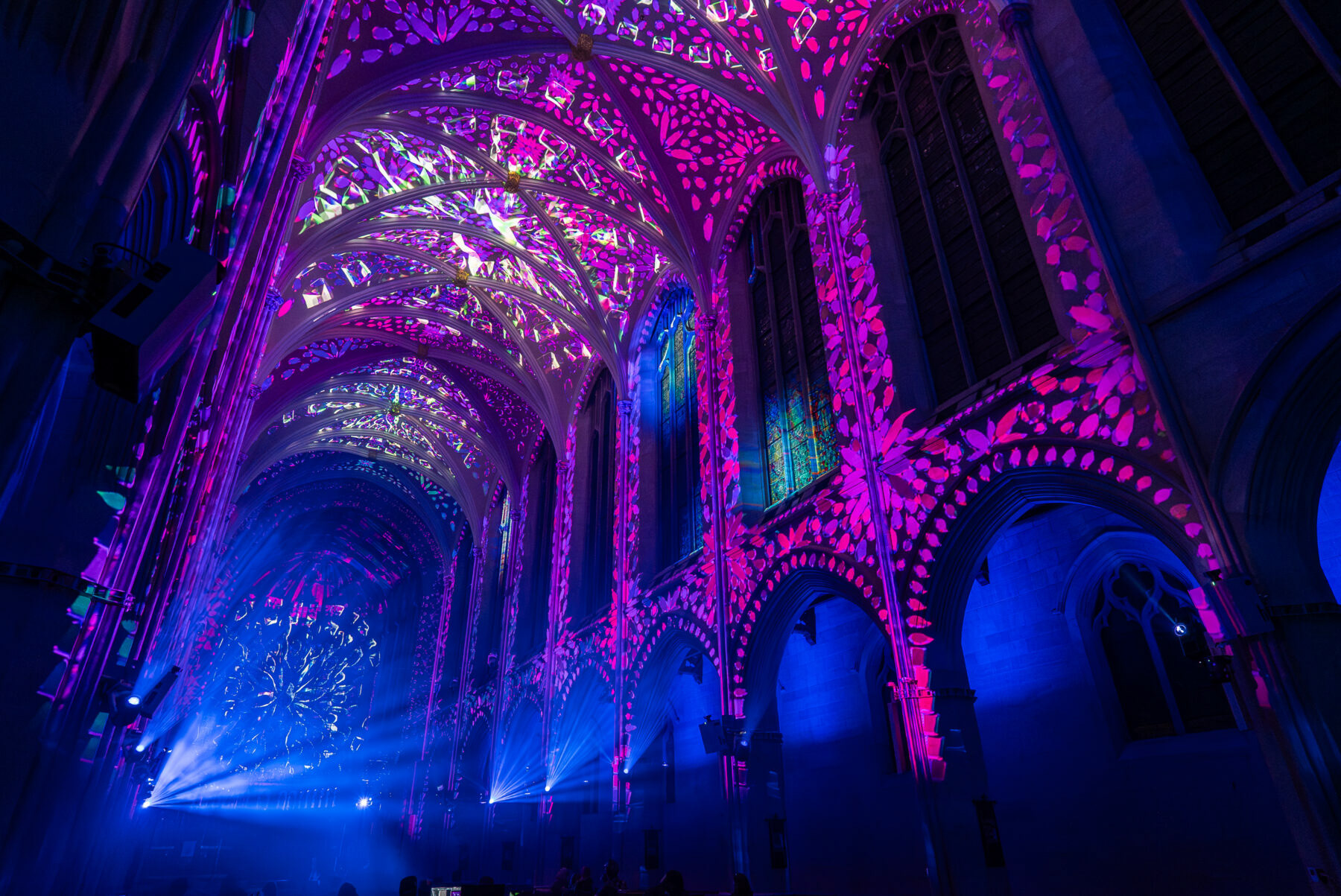
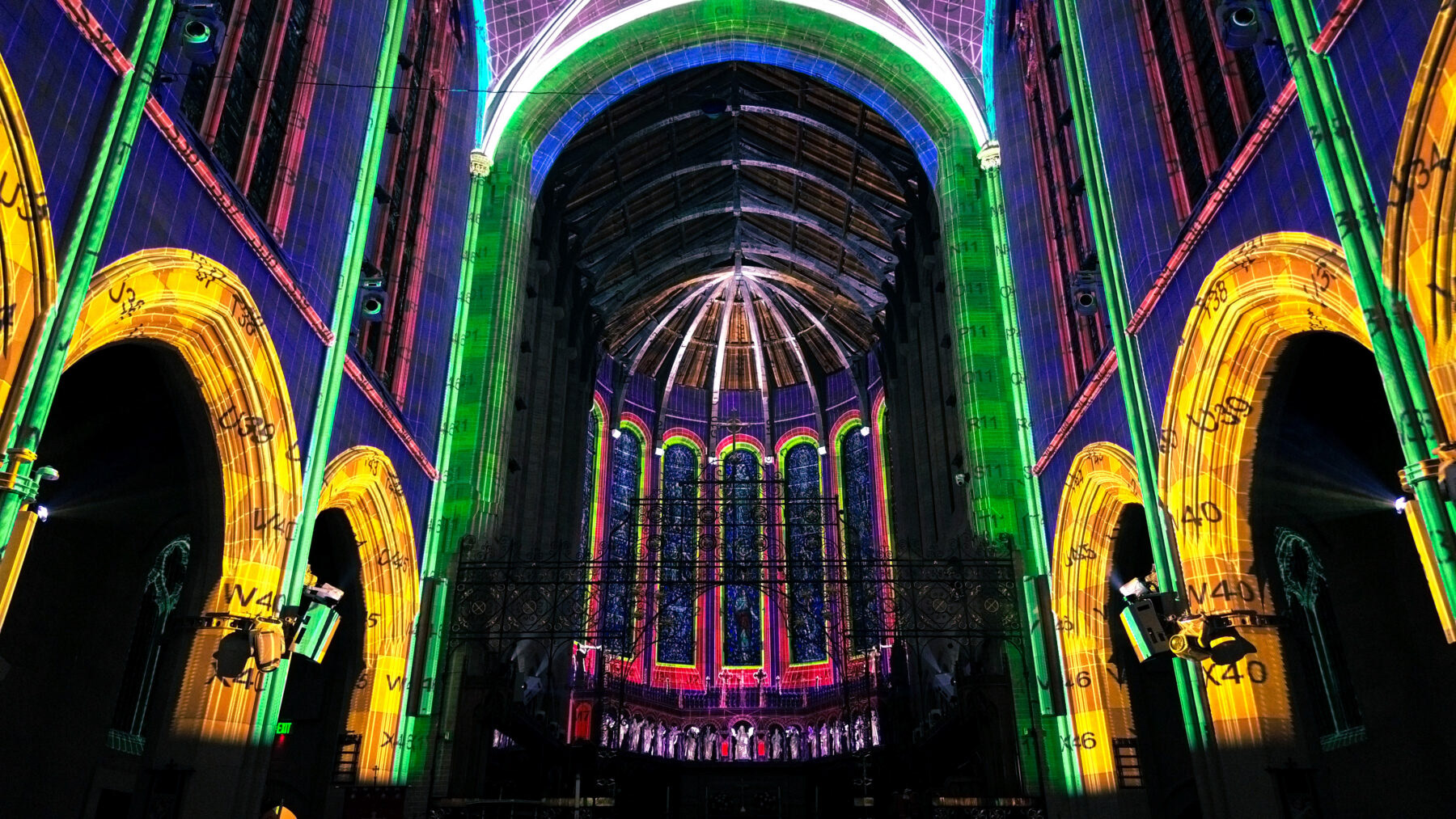
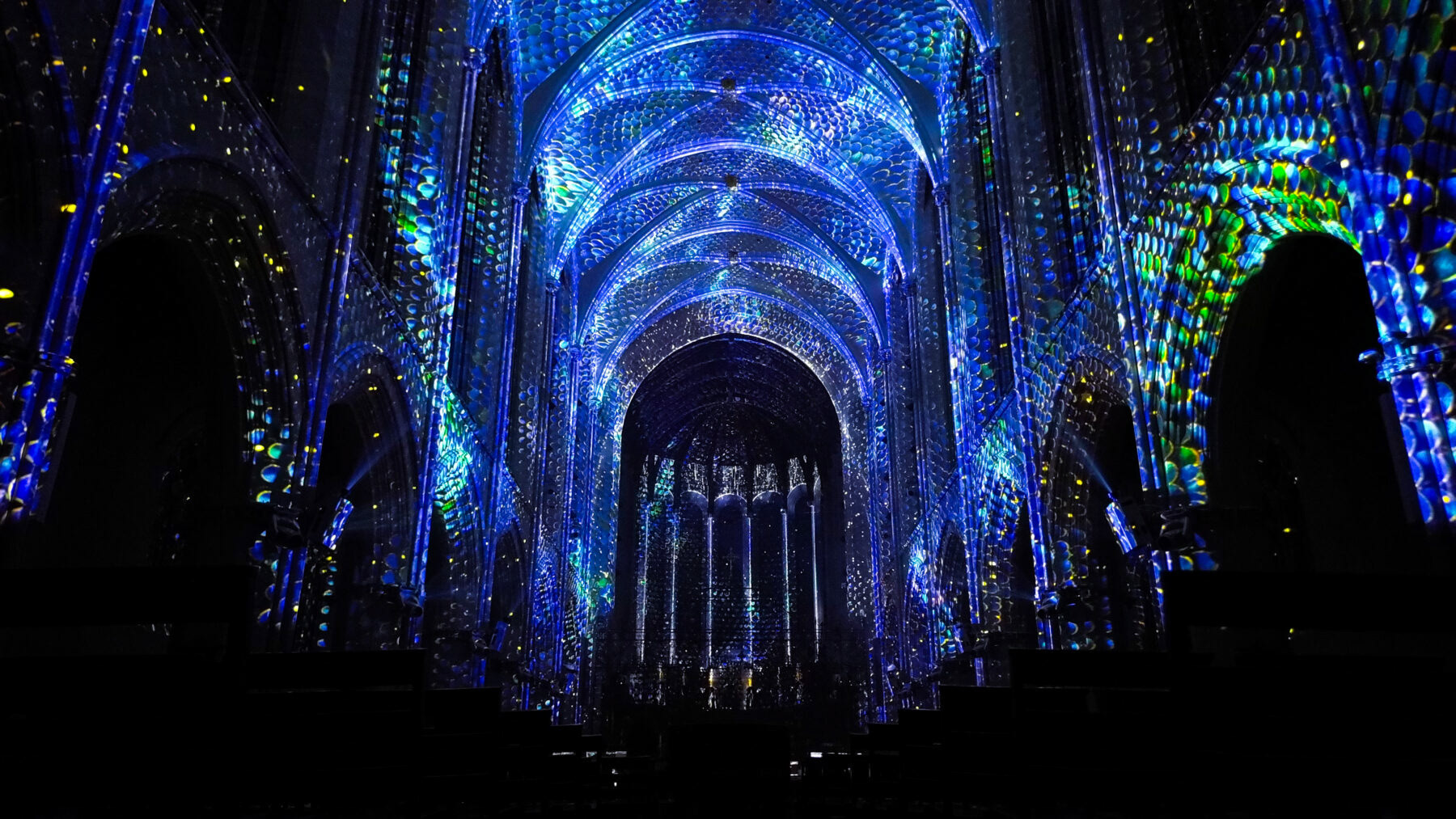
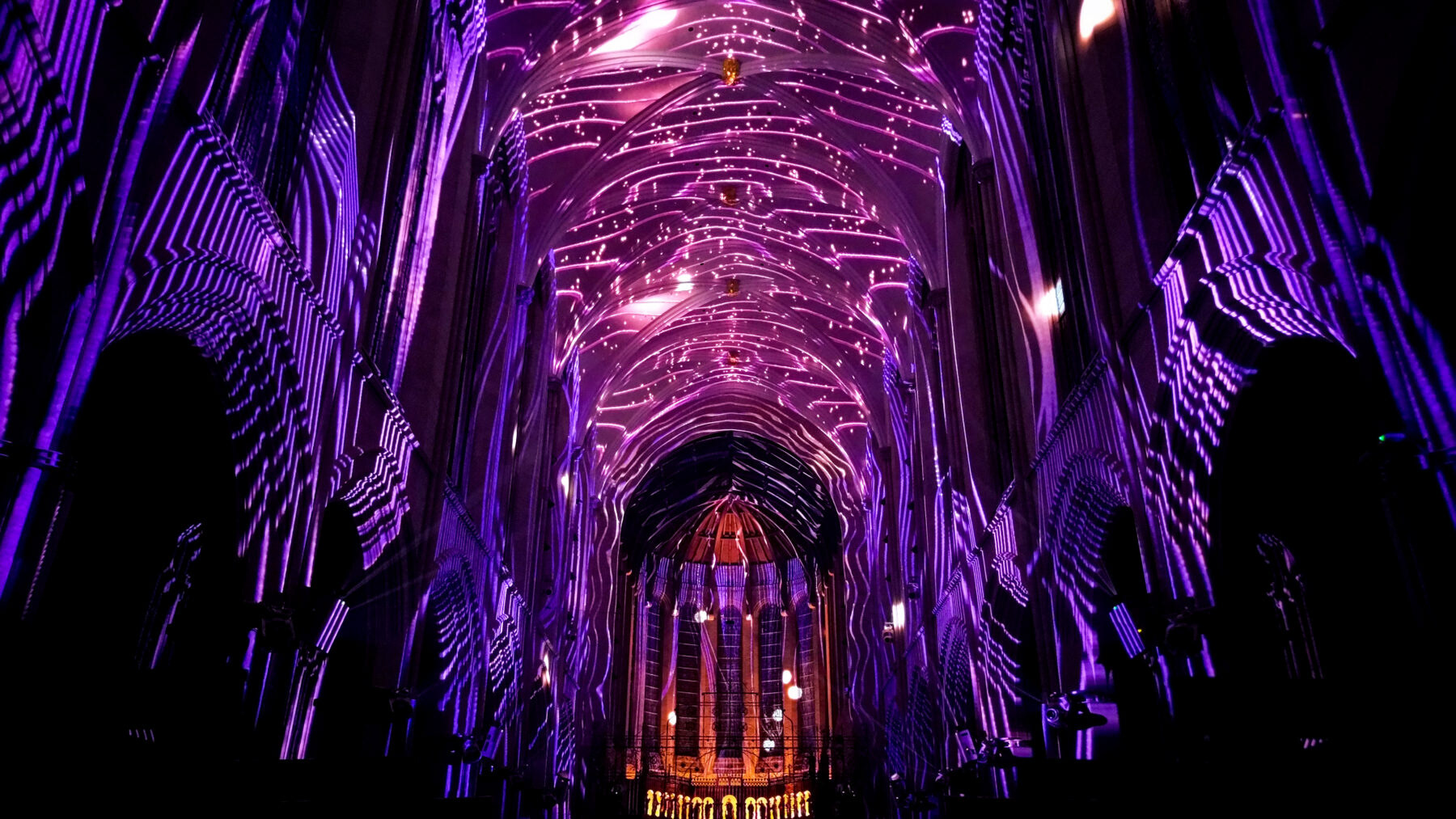
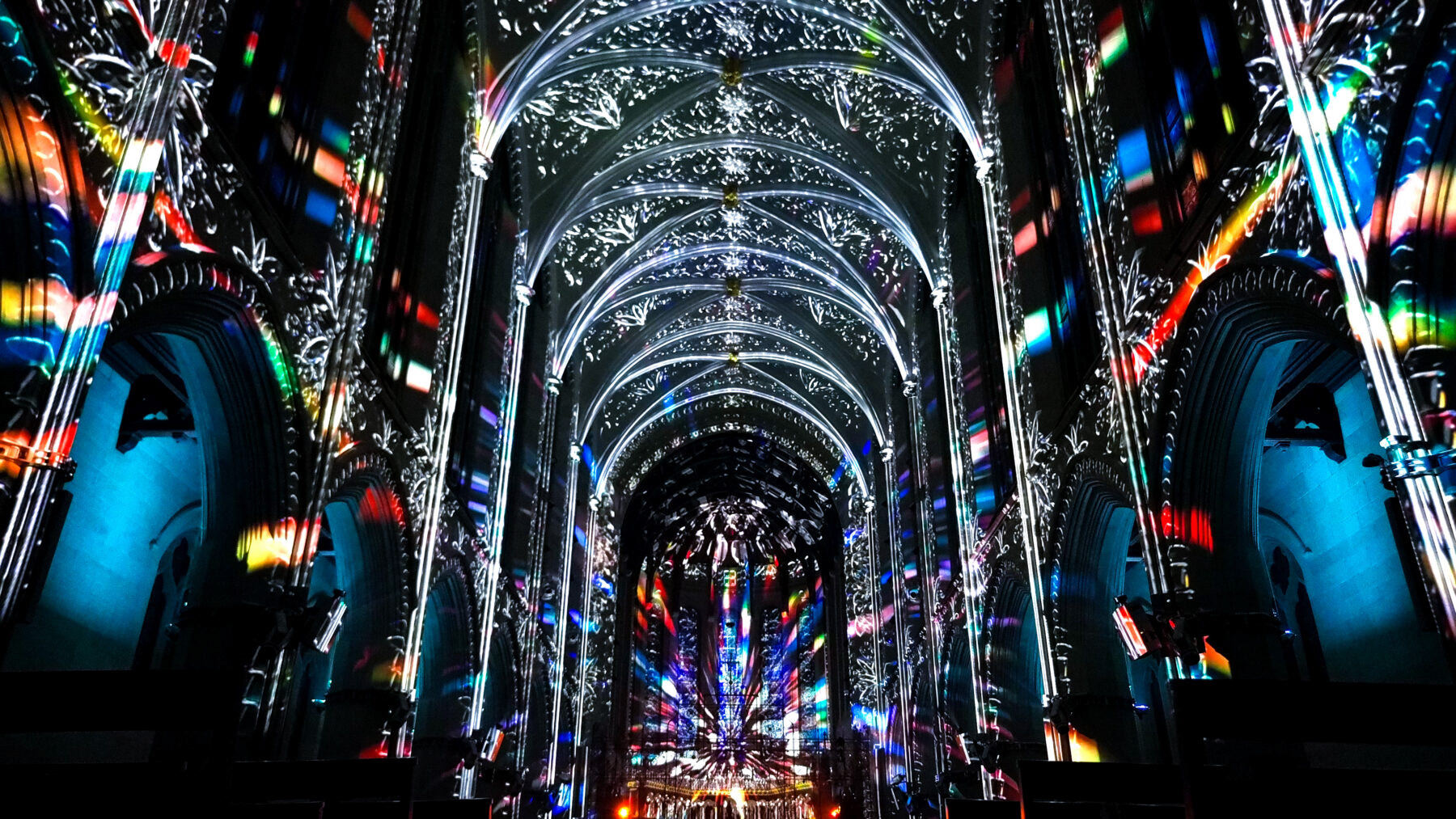
Celestia is a five-act immersive experience created for Saint John’s Cathedral in Denver. Developed by Normal Studio in partnership with Paquin Entertainment Group, the project brings together architectural projection, music, lighting, spatial sound, and atmosphere to transform the cathedral into a remarkable visual and emotional journey.
An Immersive Journey
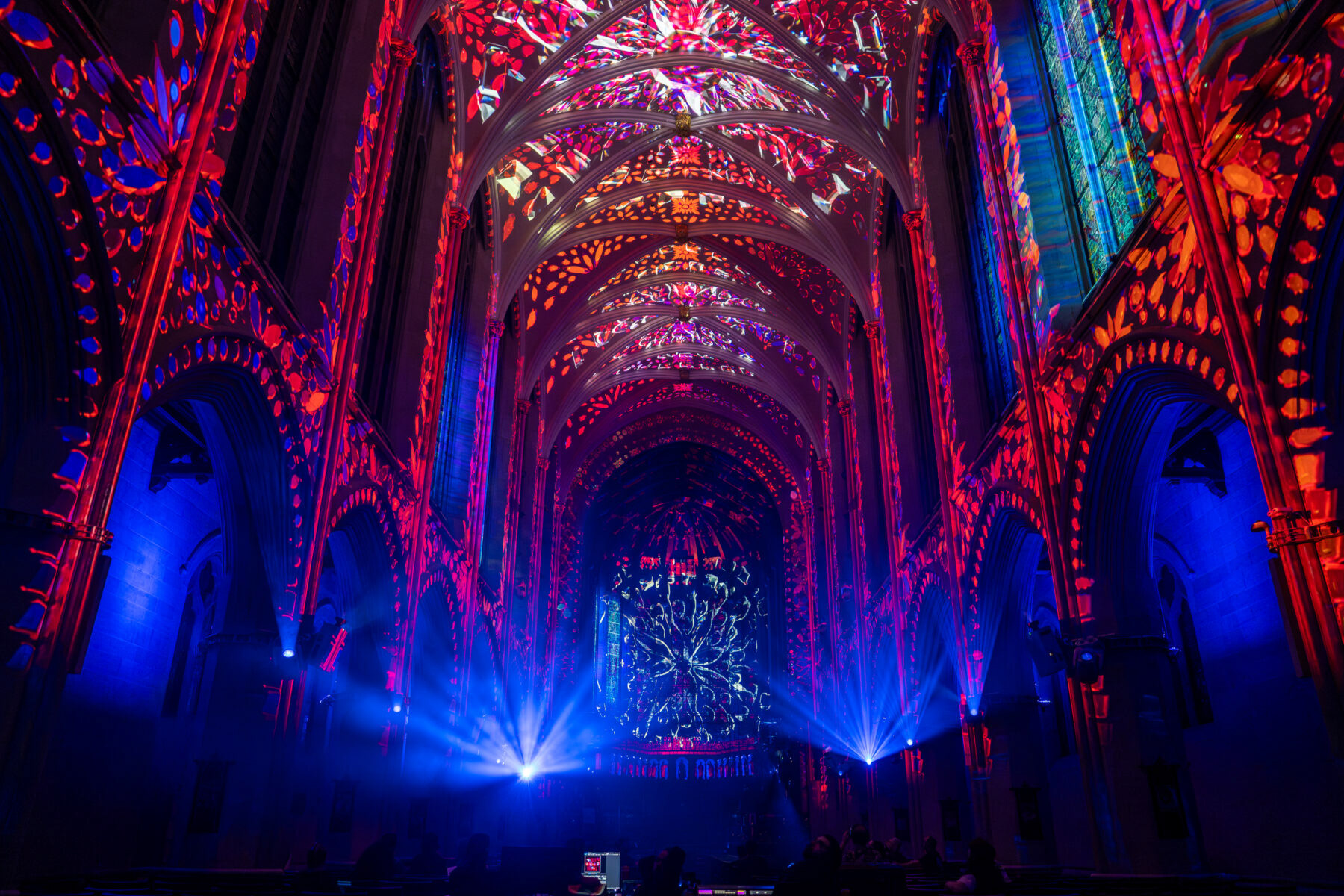
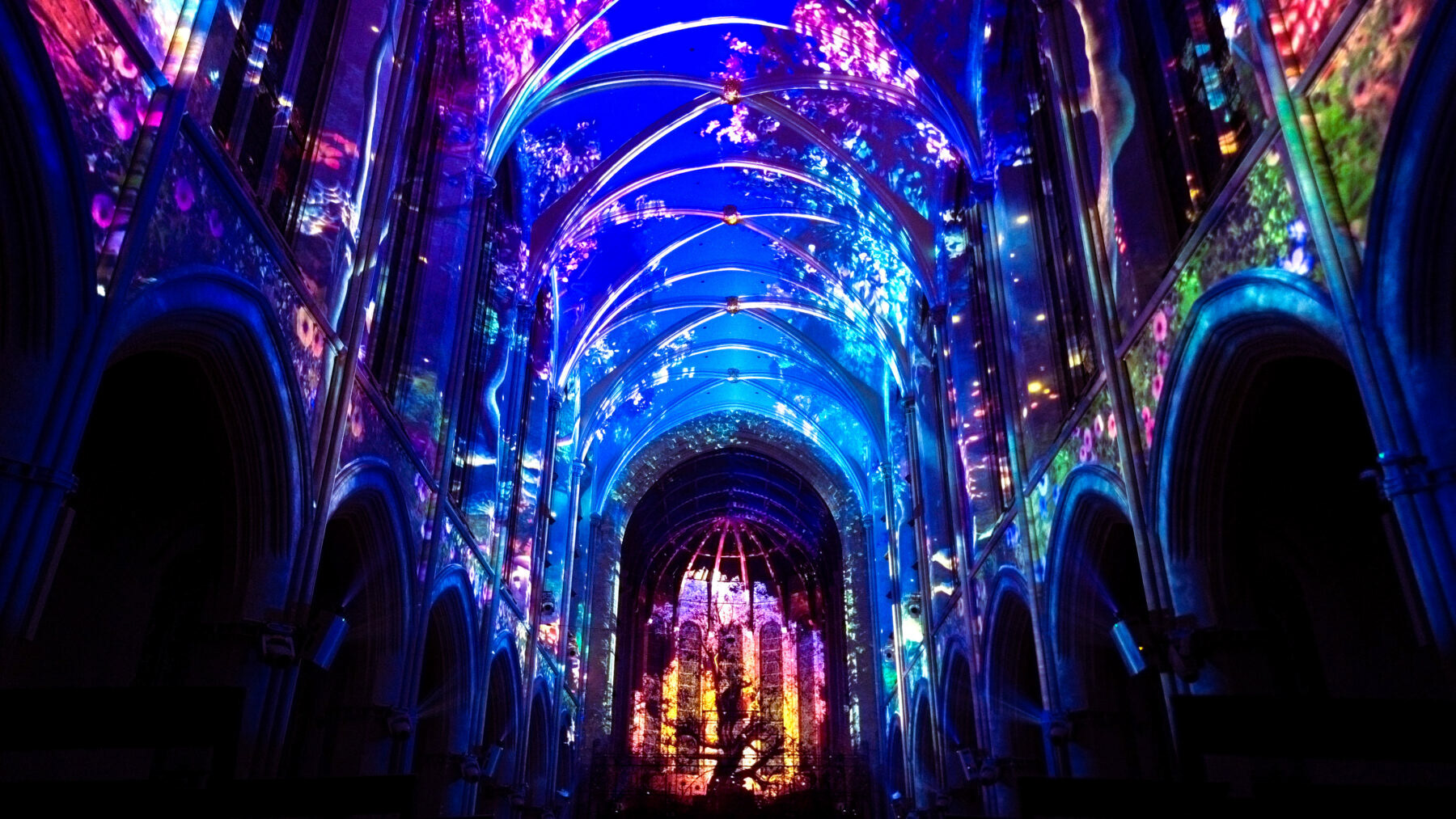
Built across the architecture of the nave, the experience uses large-scale projection mapping, synchronized lighting, spatial audio, and real-time media to reshape the space from one act to the next. These elements form a continuous composition in which image, sound, and architecture evolve together.
The work explores universal aspects of the human experience through themes of creation, struggle, renewal, belonging, and transcendence. Rather than telling a literal story, Celestia unfolds through a sequence of visual and emotional transformations, moving from the emergence of light through wonder, turbulence, rebirth, unity, and radiance.
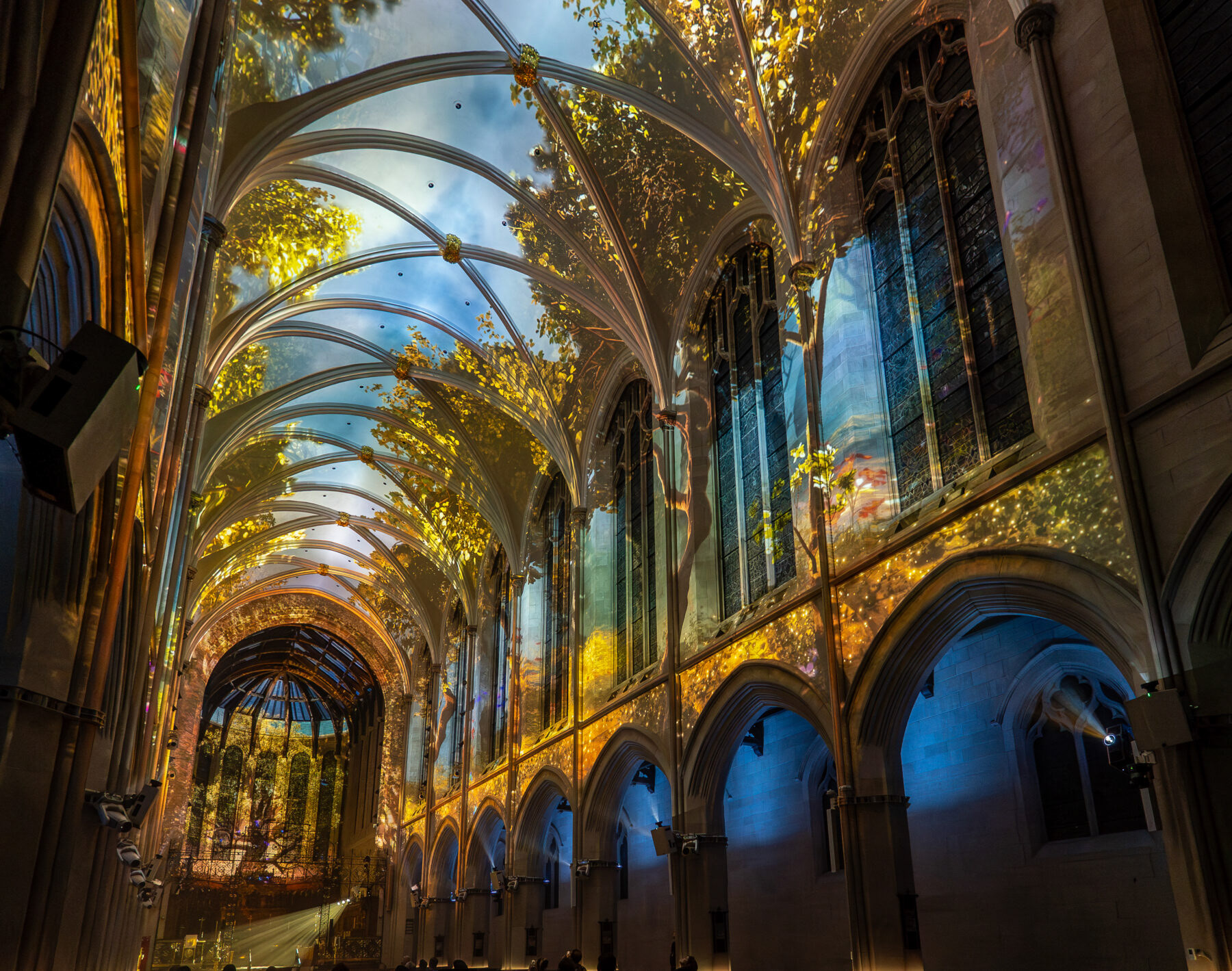
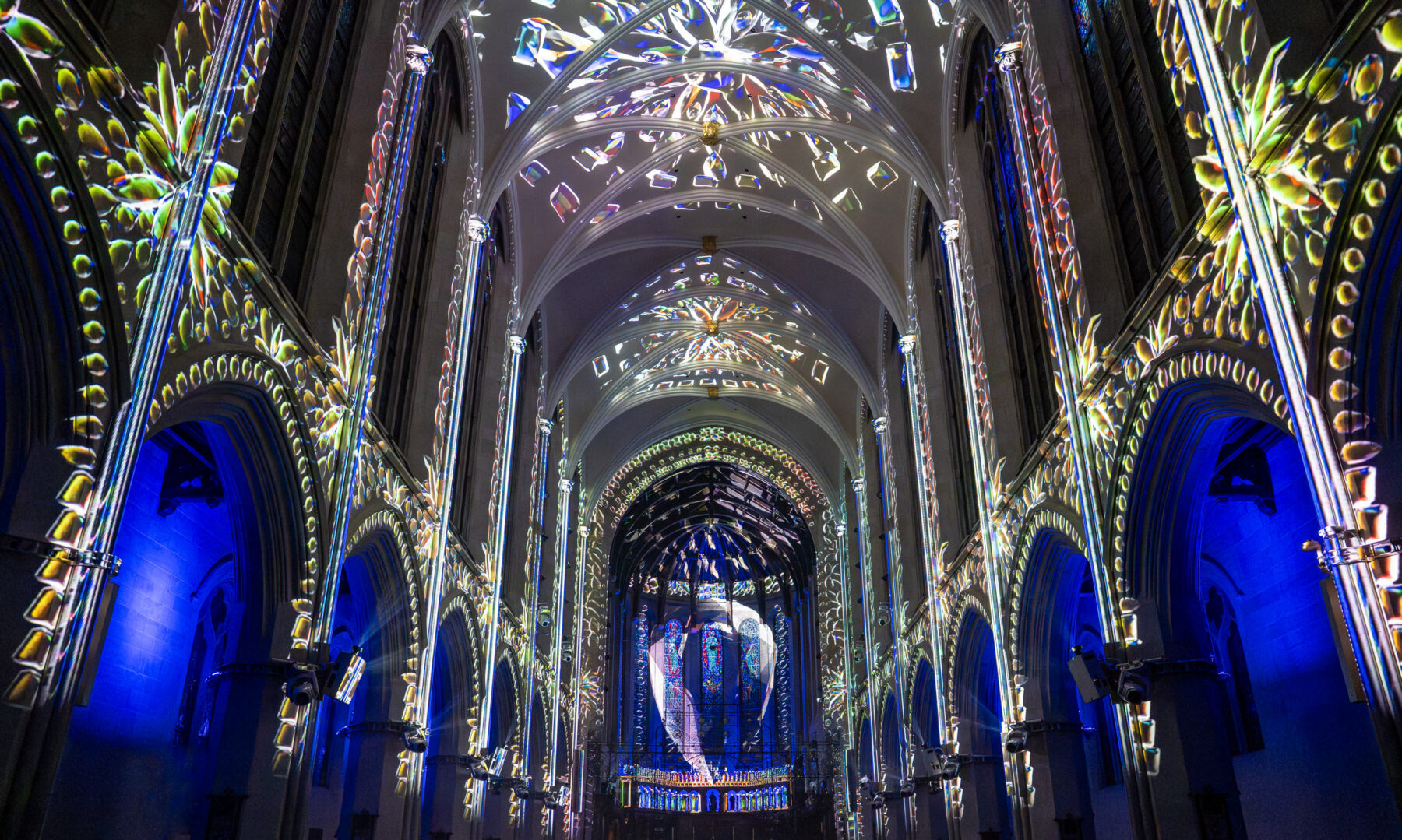
Celestial formations, organic environments, storms, ruins, traces of light, and stained-glass-inspired compositions appear across the architecture, creating a progression of distinct worlds connected by a single emotional arc.
Shaped by the Cathedral
Saint John’s Cathedral was central to the creative process from the beginning. Its Gothic Revival architecture, scale, stone surfaces, vaulted ceilings, arches, stained glass, acoustics, and spiritual character shaped the visual language of the work and directed its focus toward transformation, connection, and transcendence.
The content was designed to reveal, extend, dissolve, and transform the architecture while preserving its presence. Images emerge from structural lines, move through the nave, and expand across the vaults, allowing the cathedral itself to become part of the narrative.
Built across the architecture of the nave, the experience uses large-scale projection mapping, synchronized lighting, spatial audio, and real-time media to reshape the space from one act to the next. These elements form a continuous composition in which image, sound, and architecture evolve together.
The work explores universal aspects of the human experience through themes of creation, struggle, renewal, belonging, and transcendence. Rather than telling a literal story, Celestia unfolds through a sequence of visual and emotional transformations, moving from the emergence of light through wonder, turbulence, rebirth, unity, and radiance.
Celestial formations, organic environments, storms, ruins, traces of light, and stained-glass-inspired compositions appear across the architecture, creating a progression of distinct worlds connected by a single emotional arc.
Shaped by the Cathedral
Saint John’s Cathedral was central to the creative process from the beginning. Its Gothic Revival architecture, scale, stone surfaces, vaulted ceilings, arches, stained glass, acoustics, and spiritual character shaped the visual language of the work and directed its focus toward transformation, connection, and transcendence.
The content was designed to reveal, extend, dissolve, and transform the architecture while preserving its presence. Images emerge from structural lines, move through the nave, and expand across the vaults, allowing the cathedral itself to become part of the narrative.
Client
Saint John's Cathedral
Denver, Colorado, United State
Denver, Colorado, United State
Agency
Normal Studio
Paquin Entertainment Group
Paquin Entertainment Group
Category
Multimedia Direction
Visual Design & Art Direction
Visual Design & Art Direction
A Multidisciplinary Collaboration
Celestia was developed through close collaboration across visual design, animation, scenography, music, lighting, spatial sound, technical direction, and on-site integration. Each discipline was shaped in relation to the others, allowing the five acts to develop as one continuous experience rather than a collection of separate elements.
Celestia was developed through close collaboration across visual design, animation, scenography, music, lighting, spatial sound, technical direction, and on-site integration. Each discipline was shaped in relation to the others, allowing the five acts to develop as one continuous experience rather than a collection of separate elements.
A Virtual Production Process
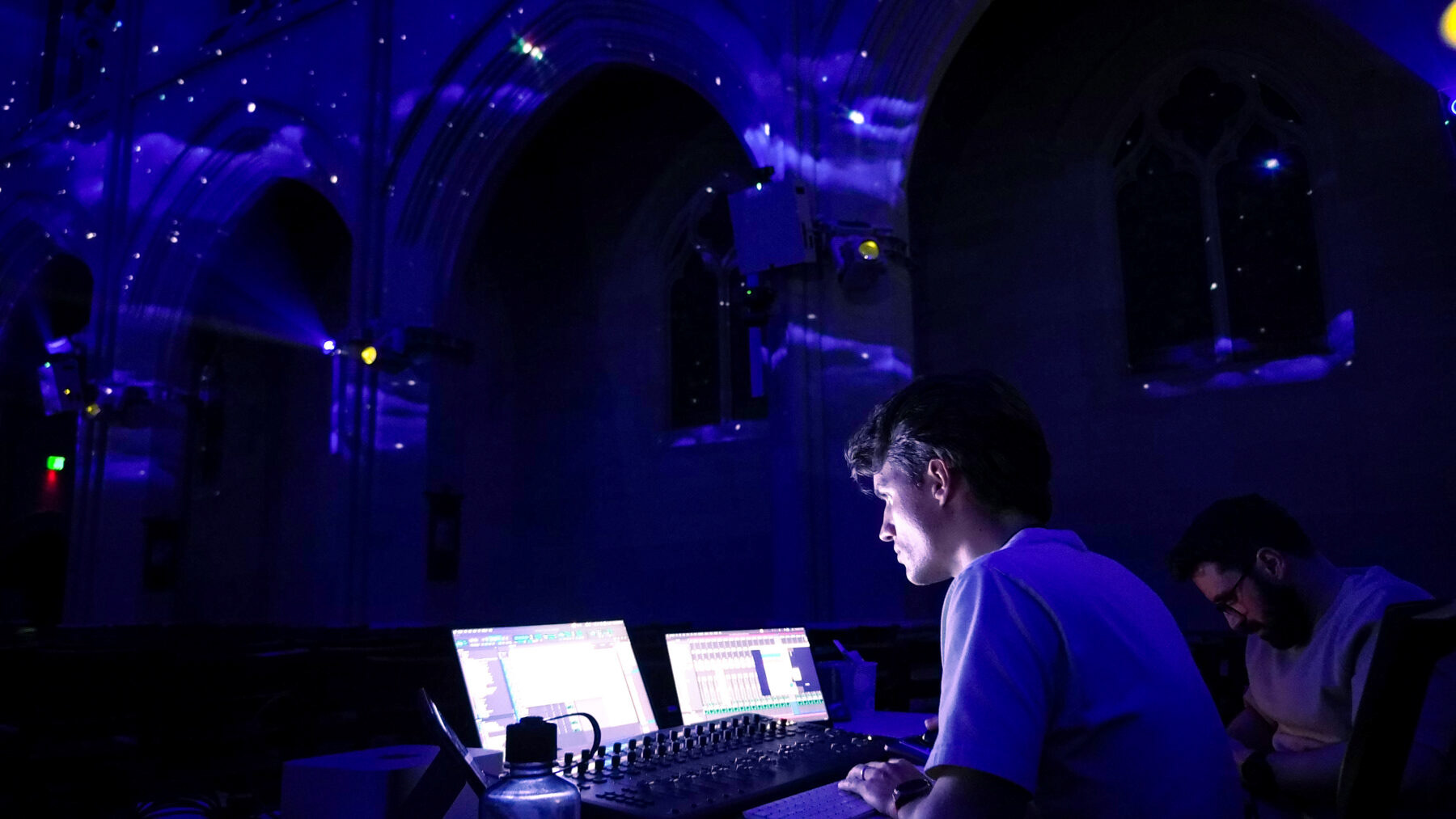
A detailed digital twin of the cathedral became the central previsualization tool throughout production, allowing the creative and technical teams to review the experience within the architecture before arriving on site.
Built in Unreal Engine, the system integrated SPAT for spatialized sound previsualization and grandMA lighting control, making it possible to evaluate image, sound, lighting, movement, scale, and sightlines together in a shared virtual environment. A matching replica of the architectural mapping was also developed for the Vertex media server, keeping the previsualization closely aligned with the final playback system.
Used throughout production, this virtual setup helped synchronize departments, review sequences in context, and maintain continuity between the creative vision and its technical implementation. The wider workflow combined rendered, procedural, and real-time media using After Effects, Cinema 4D, Notch, TouchDesigner, NDI, Unreal Engine, and Vertex.
A detailed digital twin of the cathedral became the central previsualization tool throughout production, allowing the creative and technical teams to review the experience within the architecture before arriving on site.
Built in Unreal Engine, the system integrated SPAT for spatialized sound previsualization and grandMA lighting control, making it possible to evaluate image, sound, lighting, movement, scale, and sightlines together in a shared virtual environment. A matching replica of the architectural mapping was also developed for the Vertex media server, keeping the previsualization closely aligned with the final playback system.
Used throughout production, this virtual setup helped synchronize departments, review sequences in context, and maintain continuity between the creative vision and its technical implementation. The wider workflow combined rendered, procedural, and real-time media using After Effects, Cinema 4D, Notch, TouchDesigner, NDI, Unreal Engine, and Vertex.
Technology as a Creative Tool
The production pipeline was built to support the visual and emotional direction of the work. Projection, spatial sound, lighting, and real-time systems were used to create continuity between the content and the cathedral, allowing the technology to remain present through its effect rather than becoming the subject of the experience.
The production pipeline was built to support the visual and emotional direction of the work. Projection, spatial sound, lighting, and real-time systems were used to create continuity between the content and the cathedral, allowing the technology to remain present through its effect rather than becoming the subject of the experience.
Building the Experience
A detailed virtual twin of the cathedral became an essential part of the process. Unreal Engine and VR previsualization allowed the team to evaluate scale, composition, movement, and sightlines from within the space before installation.
The wider production pipeline combined rendered, procedural, and real-time workflows across After Effects, Cinema 4D, Notch, TouchDesigner, NDI, and the Vertex media server.
Technology in Service of the Work
Throughout the project, technology remained in service of the experience. Projection, sound, light, and real-time systems were used to support the architecture and the emotional progression of the work rather than stand apart as technical features.
A detailed virtual twin of the cathedral became an essential part of the process. Unreal Engine and VR previsualization allowed the team to evaluate scale, composition, movement, and sightlines from within the space before installation.
The wider production pipeline combined rendered, procedural, and real-time workflows across After Effects, Cinema 4D, Notch, TouchDesigner, NDI, and the Vertex media server.
Technology in Service of the Work
Throughout the project, technology remained in service of the experience. Projection, sound, light, and real-time systems were used to support the architecture and the emotional progression of the work rather than stand apart as technical features.
A New Scale for the Studio
Celestia marked an important evolution for Normal Studio and became one of its most ambitious original experiences to date. The project brought together the studio’s work in media content, storytelling, visual design, and scenography, while opening new ground in architectural mapping, spatial sound, and real-time production.
As Multimedia Director, I helped guide the visual vision across these areas, introducing new real-time tools into the workflow and maintaining a clear connection between the narrative, the creative teams, and the experience as it took shape in the cathedral.
The result is a work designed not simply to animate the cathedral, but to feel inseparable from it, an experience in which architecture, image, sound, and light come together as one continuous immersive space.
PROCESS
Available October 2026
Photography and Video property of Normal Studio & Paquin Entertainment Group